
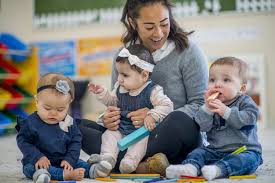
Educators consider play important for children’s learning, development, confidence, and well-being.
At Doncaster childcare, your child will indulge in a variety of play because it helps them with physical, mental, and social development. Unstructured play and structured play are part of the environment.
Why is play important at Doncaster Childcare?
The educators at Doncaster preschool know how important it is for children to experience different types of play. These include unstructured and structured play, indoor and outdoor play, solo and group play, and craft and creative play. When children are exposed to free play, it’s good for their physical, social, emotional, and imaginative development.
During play, children interact with other children, which teaches them to cooperate and manage their emotions. Since they are playing on their own, they also learn to resolve conflicts and build empathy. Eventually, it reduces stress and helps them feel safe. It also marks an easier transition to kindergarten.
Play teaches children how to socialize without adult supervision or interference. It helps them get along with other children. Since young children learn and develop quickly, they begin to get a sense of their identity and how they are different from others.
The types of play
Unstructured free play is unplanned. It just happens and depends on where your child’s interest lies. Unstructured play is important because children use their imagination. It is unpredictable and could involve unexpected challenges, so children develop resilience. It’s also good for your child’s mental health. Unstructured play includes the following.
- Playing alone or with others, including musical games or artistic endeavors.
- Imaginative play, for example, making boxes or blankets and turning them into small castles or make-believe houses.
- Playing in the backyard or the school playground.
The teachers will direct your child towards unstructured play so that they do not harm themselves.
Structured play is organized and happens at a fixed time. It’s usually guided by a grown-up, and older children will enjoy it more. Some examples of structured play include the following.
- Storytelling for toddlers at the local library.
- Music and dance led by the caregivers for children of all ages.
- Board games or card games.
- Modified sports for slightly older children like Cricket Blast, Aussie Hoops basketball, and AusKICK football.
How does play help your child’s development?
As children grow older, their attention spans develop too. Also the way they play changes. Children tend to get more creative and experimental, playing with toys, games, and ideas. They need extra space and time to play, and you can find that at Doncaster Childcare.
- Music and songs develop hearing and movement.
- Toddlers enjoy playing with cardboard boxes and blow balls, which they can build, push, or drag.
- Dressing-up games with scarves, hats, and so on are good for imagination.
- Hills and tunnels encourage physical activities like crawling and climbing.
Play is the primary way your child develops important life skills. It will help them explore the world and foster physical, social, and emotional growth. It’s necessary for brain development and will improve their problem-solving abilities.
Discover Doncaster’s top childcare facility today to know your options and choose a preschool that’s suitable for your child.